The Complete Guide to Scan to BIM Conversion
Scan to BIM has revolutionized how we document existing conditions. This comprehensive guide covers the entire process from field scanning to final model delivery, helping you understand what to expect and how to get the best results.
Understanding Point Cloud Technology
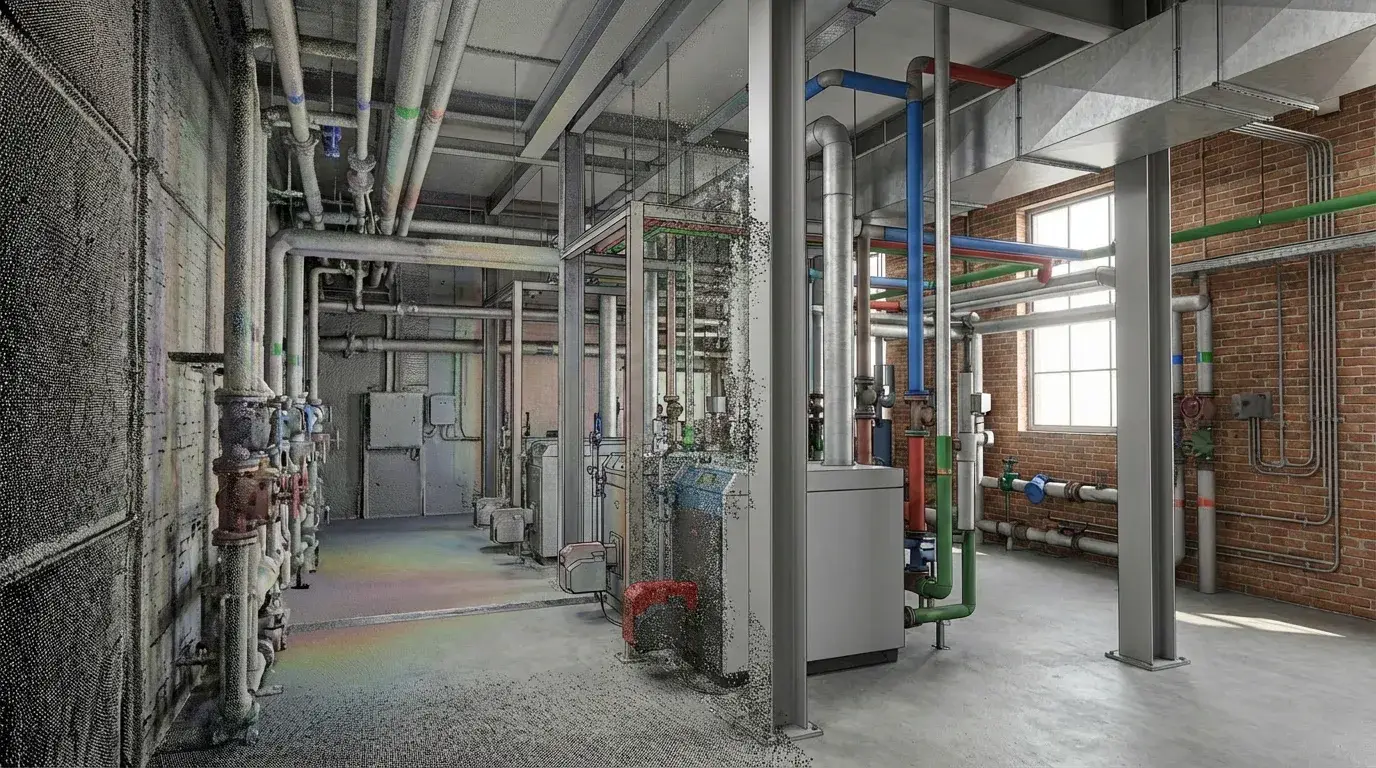
Laser scanning creates millions of precise 3D points that represent existing conditions. Understanding point cloud density, accuracy specifications, and scanning methodologies helps set appropriate expectations for the resulting BIM model.
Scanning Best Practices
Quality Scan to BIM starts with quality scanning. Ensure comprehensive coverage with appropriate overlap between scan positions. Document areas that couldn't be scanned and any temporary obstructions that affected data capture.
Point Cloud Processing
Raw scan data requires registration, cleaning, and often format conversion before modeling begins. This processing step significantly impacts modeling efficiency. Invest time in thorough point cloud preparation.
Modeling Methodology
Different project types require different modeling approaches. Document precise LOD requirements upfront. Decide which elements need parametric modeling versus simplified representation based on project needs.
Quality Control
Establish clear deviation tolerances and verification procedures. Overlay the model on the point cloud to check accuracy. Document any areas where existing conditions couldn't be precisely determined from scan data.
Deliverables and Documentation
Beyond the model itself, provide clear documentation of modeling decisions, deviation reports, and any assumptions made. This information is crucial for downstream users of the model.
Conclusion
Scan to BIM bridges the physical and digital worlds, enabling BIM workflows for existing buildings. Success requires understanding both scanning technology and BIM modeling practices.