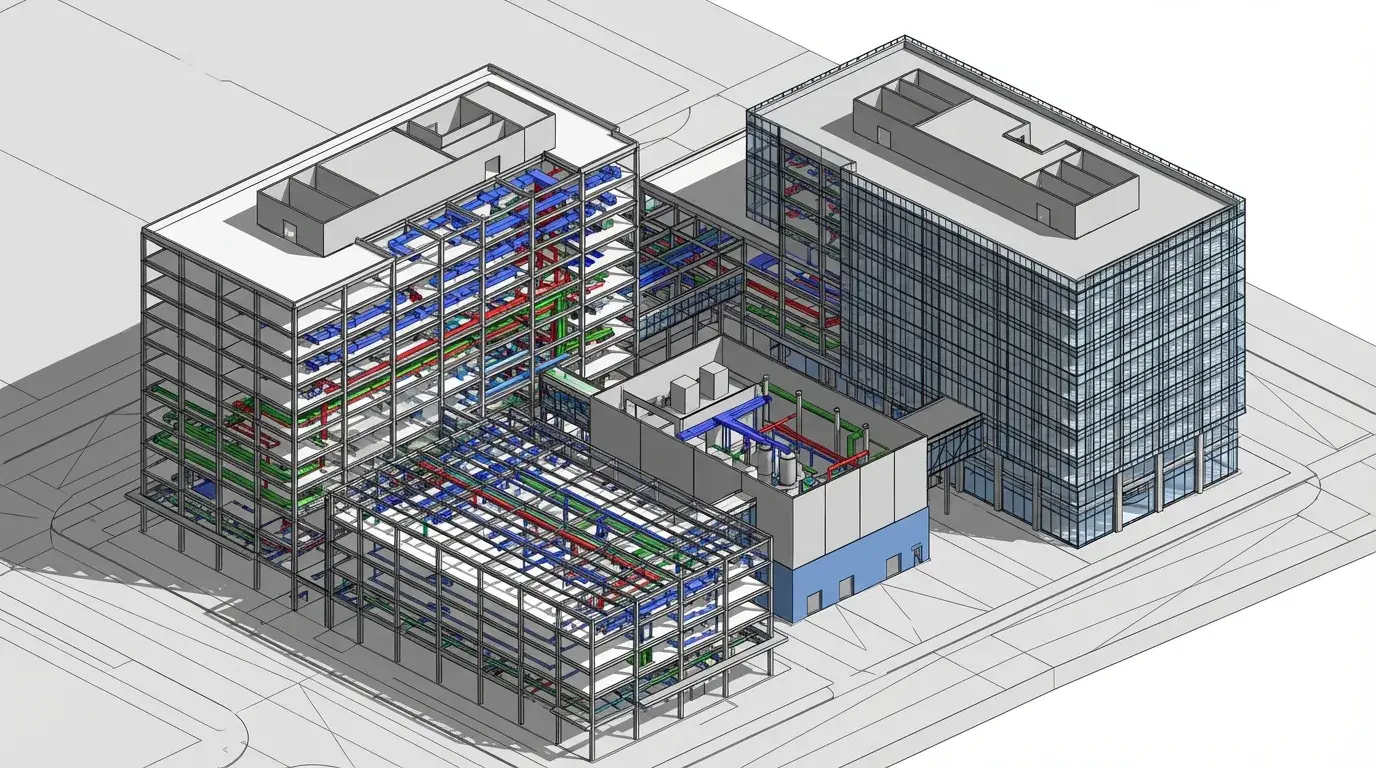
Revit Best Practices for Large-Scale Projects
Large-scale projects push Revit to its limits. Without proper strategies, model performance degrades, coordination becomes chaotic, and productivity suffers. These best practices keep large projects running smoothly.
Model Organization
Divide large projects into logical linked models. Consider discipline separation, building zones, or floor divisions. Each linked model should have a clear owner responsible for its content and coordination.
Workset Strategy
Develop a consistent workset structure across all project models. Train team members on proper workset usage, especially the importance of not keeping worksets unnecessarily checked out.
View Template Management
Standardized view templates ensure consistency and reduce file bloat from ad-hoc view overrides. Maintain templates in a master template file that all project models reference.
Family Standards
Heavy or poorly constructed families can severely impact performance. Establish family complexity guidelines and review new families before adding them to projects. Maintain a curated project library.
Warning Management
Revit warnings accumulate over time and impact performance. Establish regular warning review sessions. Some warnings indicate modeling problems that should be resolved; others can be safely dismissed.
Conclusion
Success on large Revit projects requires discipline and consistent standards. Invest time upfront in establishing protocols, and enforce them throughout the project lifecycle.