Services
VDC & BIM Consulting
Strategic BIM implementation, execution planning, and workflow optimization tailored to your organization's needs and project goals.
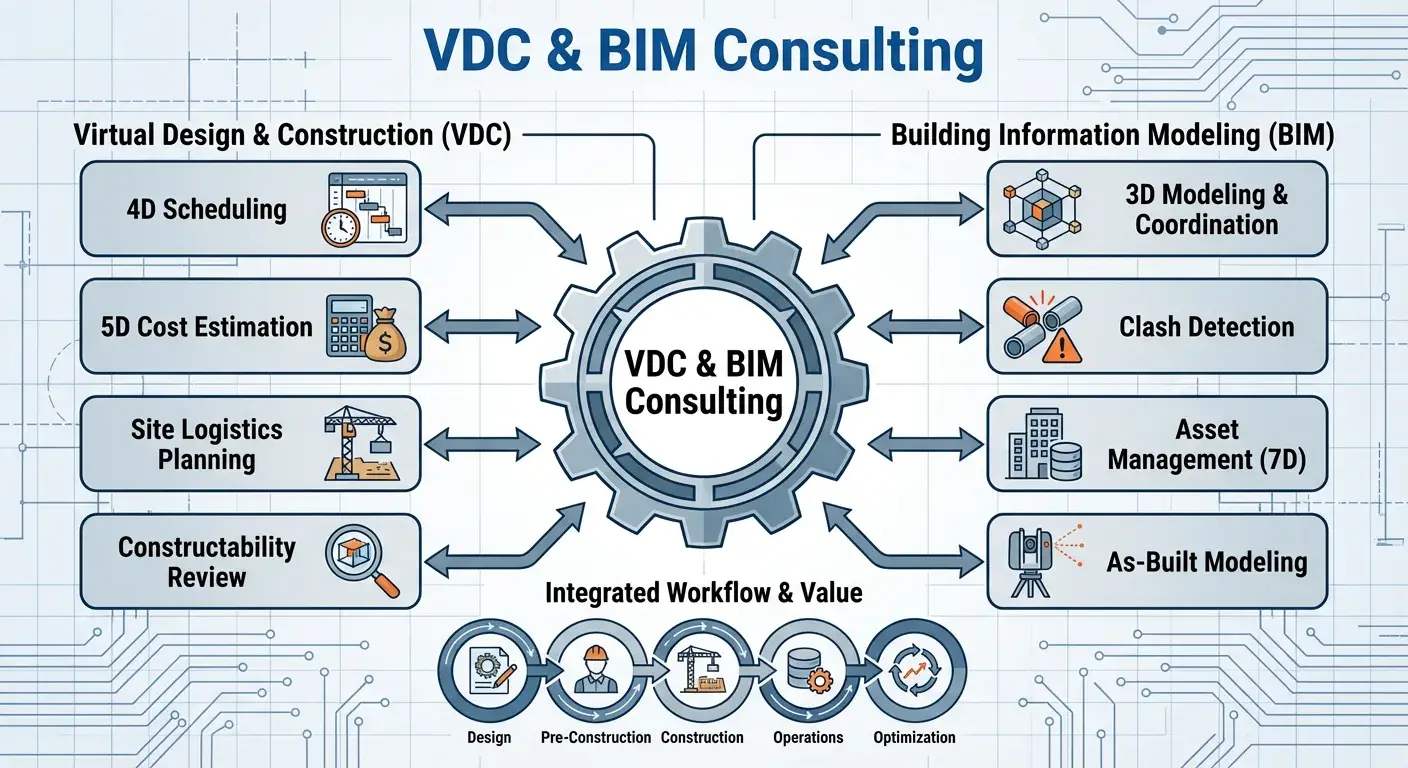
Advice You Can Put Into a Contract
Most BIM problems are decided before anyone opens a model: an EIR nobody read, a template that cannot produce the schedules the owner asked for, a CDE where nobody can tell shared from published. This is advisory work that fixes those decisions while they are still cheap — the BEP, the standards, the exchange cycle and the acceptance criteria.
Your team keeps ownership throughout. We draft, review and recommend; you approve and issue. The engagement is written to end with your BIM lead running the process without us, and with a standards document they can hand to the next person who joins.
What We Offer
Consulting Services
The decisions worth making before production starts, made in the right order.
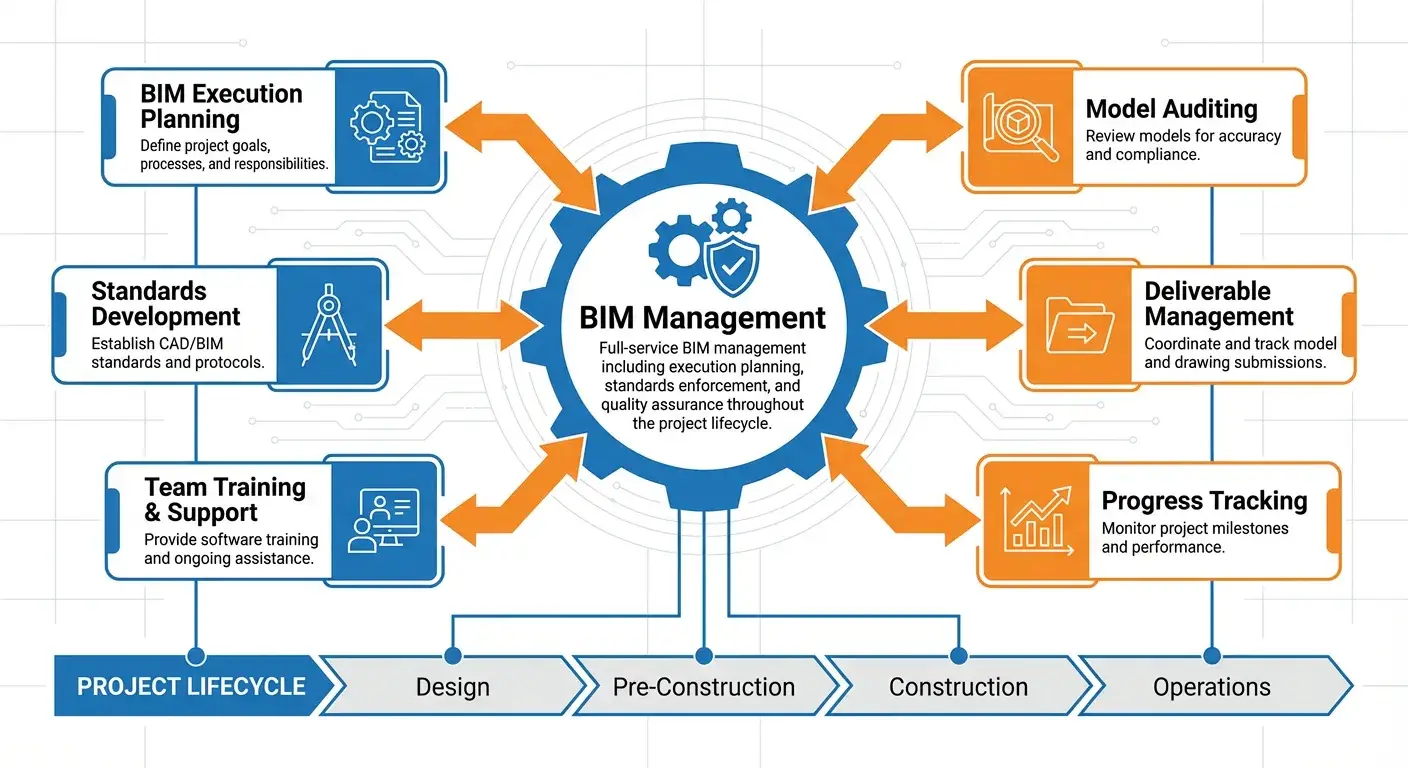
BIM Execution Planning
We turn an EIR into a BEP your task teams can actually follow, written around how this project is procured rather than a template with the names changed.
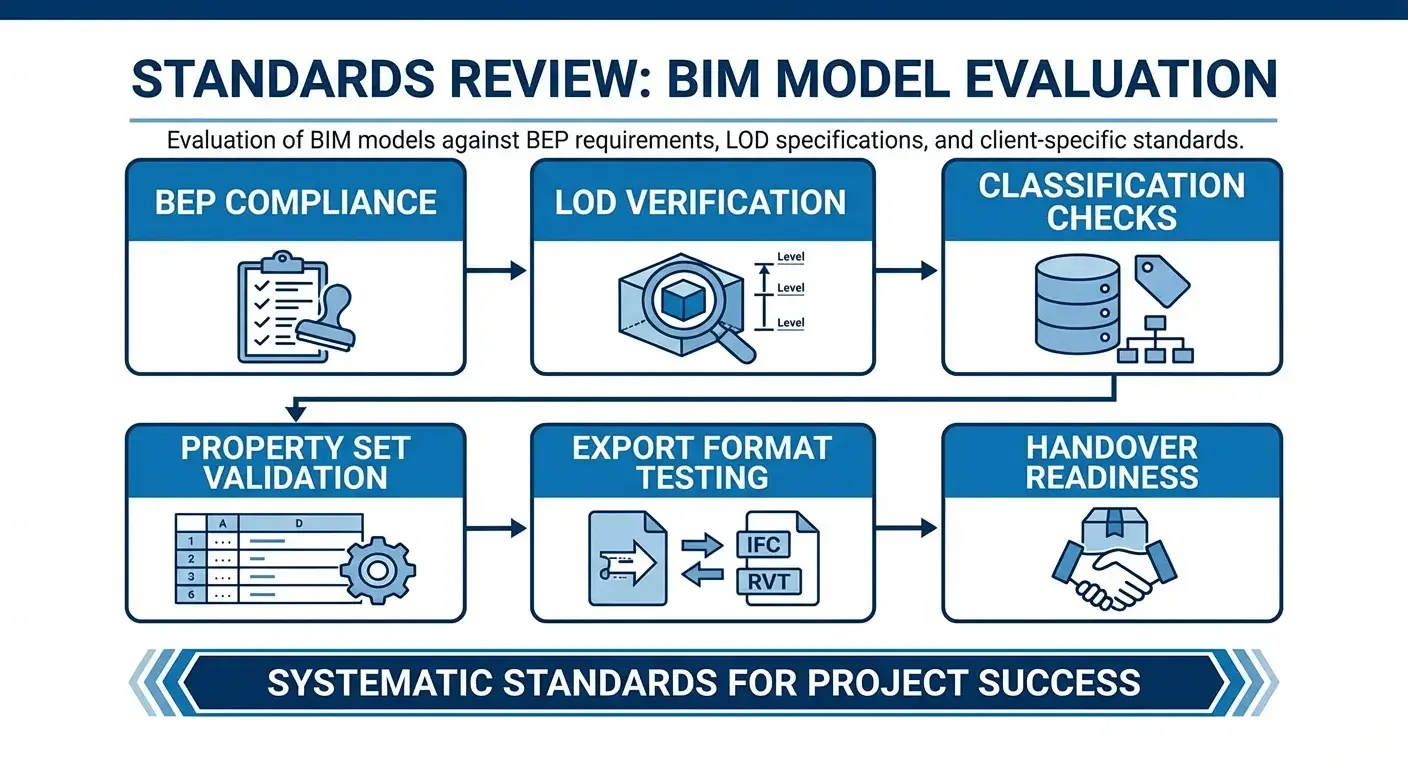
Standards & Template Setup
The template, the parameters and the naming rules decided once, at the start, because every one of them is expensive to change after production begins.
CDE & Workflow Setup
A common data environment configured so the status of every information container is obvious, and so issuing a model is a routine act rather than an email.
Coordination Facilitation
We set up and chair the coordination cycle, then hand it over. Your team runs it; we make sure it runs the same way every week.
How We Work
How the coordination process we set up runs
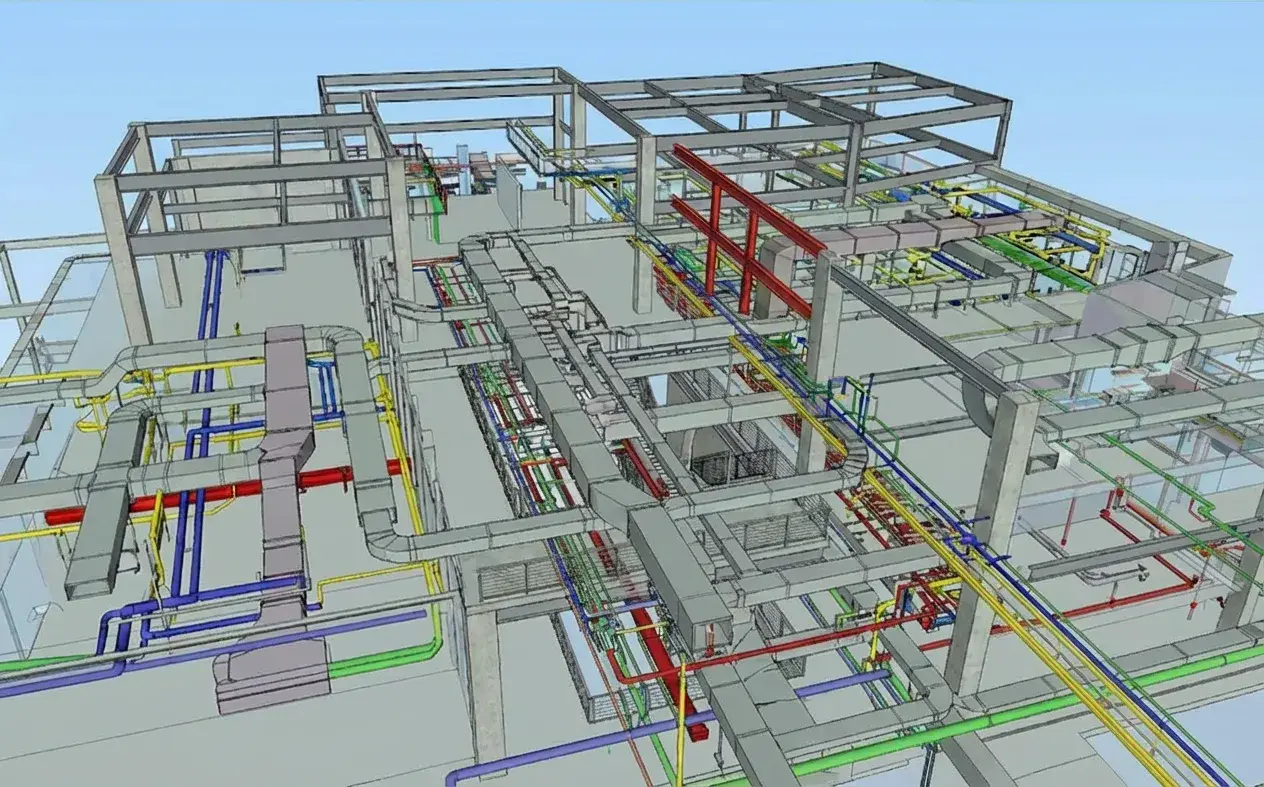
The cycle we configure and then hand over: federation, a clash matrix, triage and sign-off you can evidence.
Inputs and coordination scope
We collect the discipline models, the BEP, the clash matrix if you have one, and the tolerances that matter on this project. If no matrix exists, we propose one and you approve it.
Model federation
Discipline models are assembled into a federated model on a defined cycle, with origins, levels and grids verified so clashes are real rather than alignment artefacts.
Clash testing
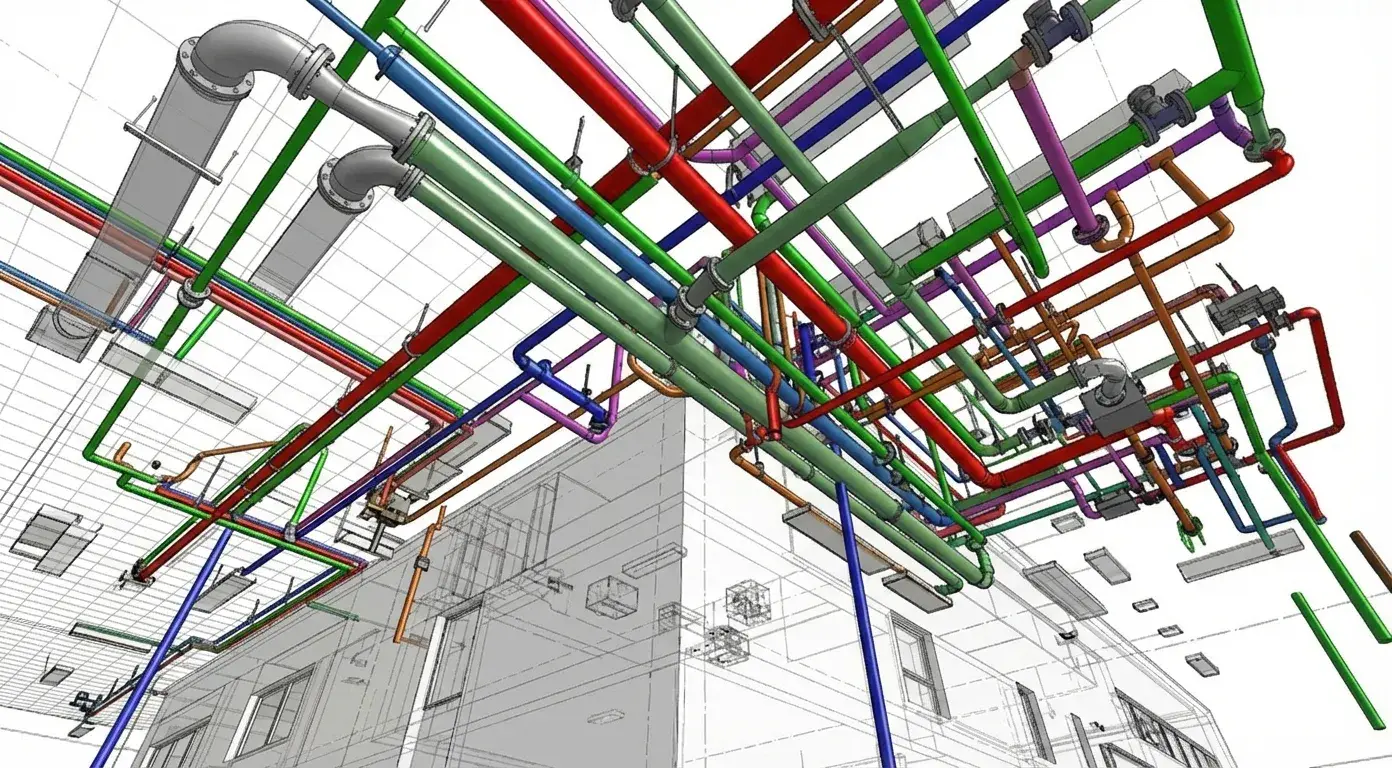
Hard, soft and clearance tests run to the agreed matrix and tolerances, rather than one indiscriminate all-versus-all run that buries the real issues.
Triage and classification
Raw results are filtered into genuine issues, grouped by cause and assigned an owner and priority. You receive decisions to make, not a five-thousand-clash report.
Constructability review
Beyond geometry: access for installation, maintenance clearances, routing sense and sequencing problems a clash engine cannot see.
Issue rounds
Issues are exchanged as BCF or in your issue tracker, re-tested each cycle, and tracked to closure with an auditable history.
Sign-off
A zone is released only when its open issues are closed or formally accepted, recorded against the agreed acceptance criteria.
Coordination record
Federated model, issue log, clash reports and the sign-off record, issued into your CDE.
Our Benefits
What you actually get
How this differs from a BEP template with your project name pasted into it.
Reviewed by a registered architect
Aercon is architect-led — a registered architect oversees delivery, so your model is questioned on design and constructability, not only geometry. Sealing and professional responsibility stay with your professionals of record.
A clash matrix, not an all-versus-all run
Tests are defined per discipline pair with agreed tolerances. An indiscriminate run produces thousands of results and hides the handful that matter.
Constructability, not just geometry
We look at installation access, maintenance clearance, routing sense and sequencing — the problems a clash engine cannot see and site finds first.
Issues tracked to closure
Every issue is classified, owned, exchanged as BCF or in your tracker, and re-tested each cycle with an auditable history rather than a fresh report each week.
A QA record, not a QA claim
Three gates before anything leaves: modeller self-check, an independent reviewer who did not build it, then lead sign-off. The signed checklist ships with the deliverable.
Your drawings stay yours
NDA before we receive anything, access limited to the named project team, and we never reuse a client's models, families or drawings for anyone else.
Our Work
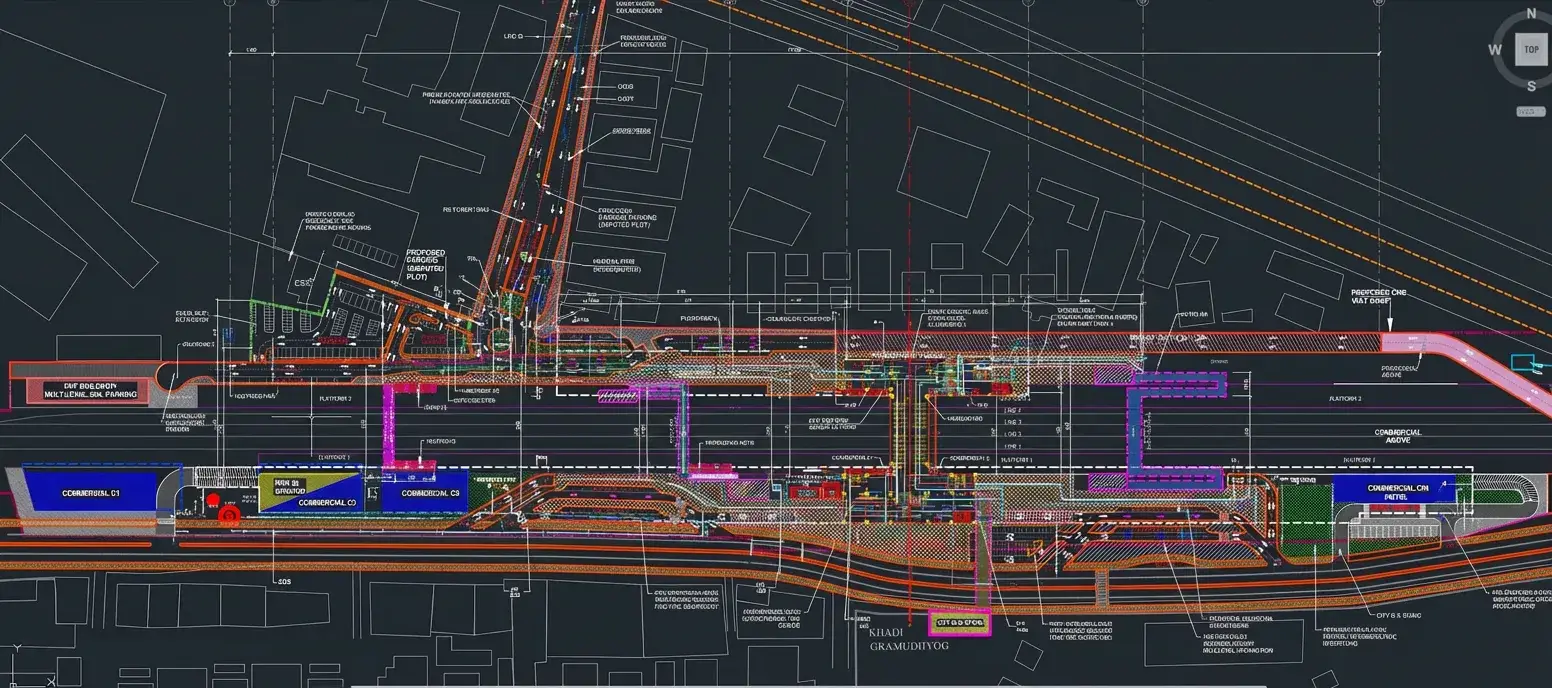
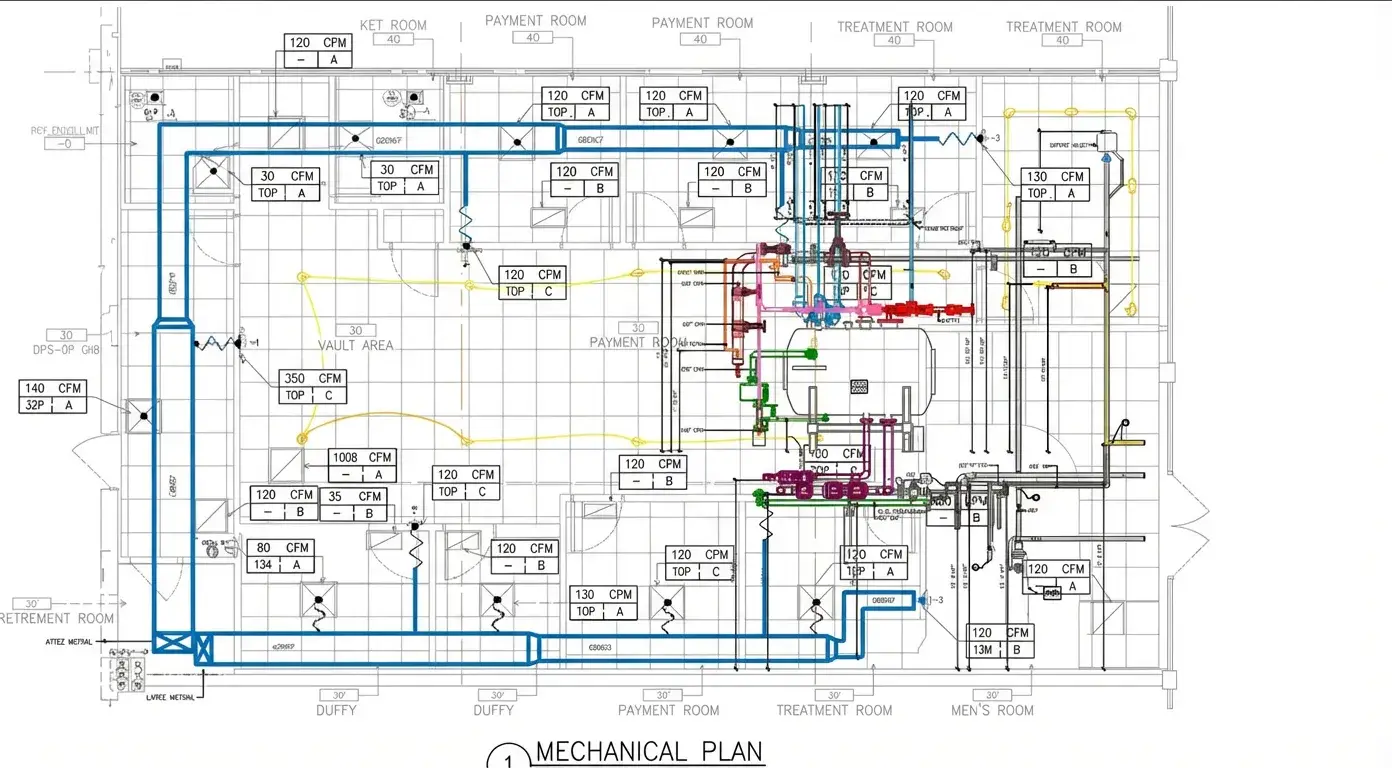
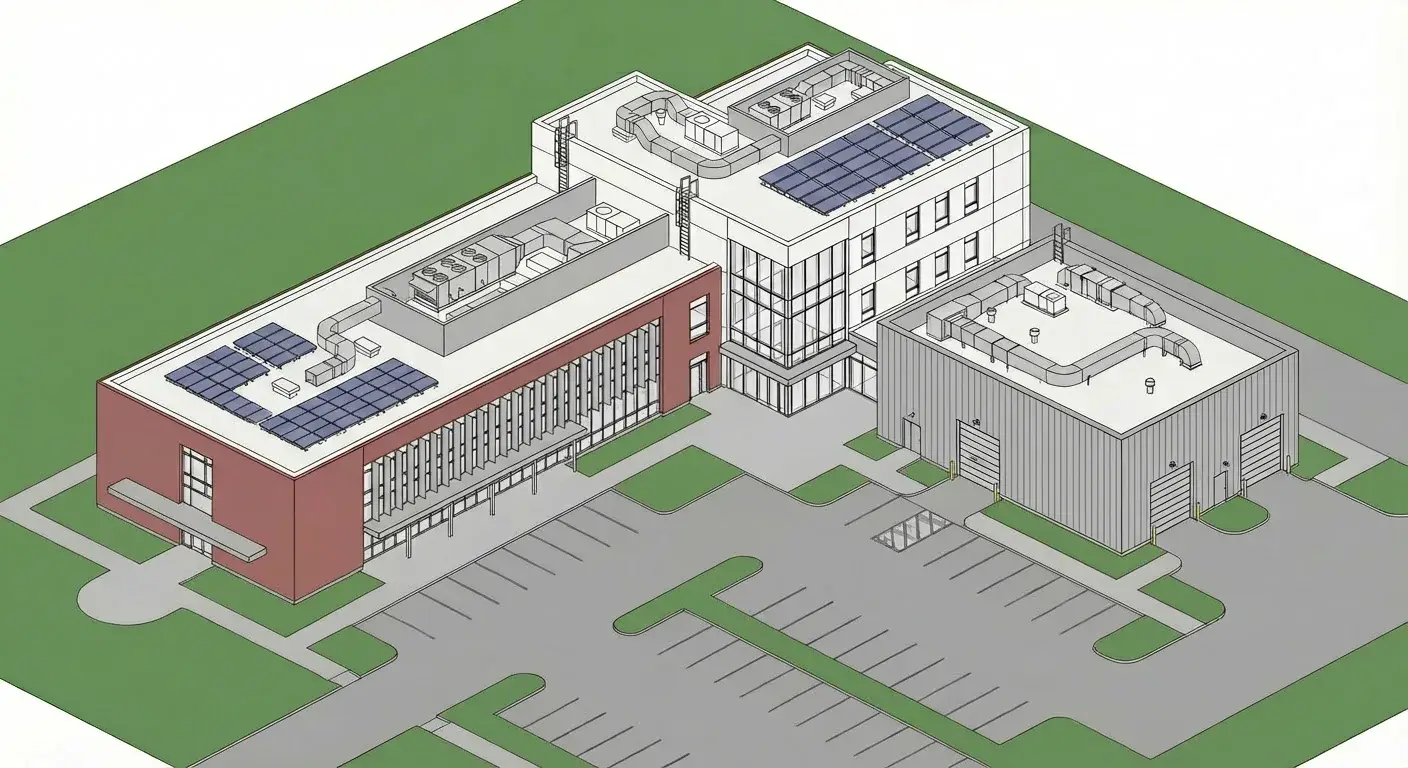
Projects We Have Supported
Execution planning, standards and coordination setup across sectors.

Sectors
Industries We Serve
Delivering BIM excellence across diverse sectors with tailored solutions.
FAQ
Frequently Asked Questions
Have an EIR you need a BEP against?
Send the EIR and your current template. We will tell you where the gaps are before you commit to a scope.